
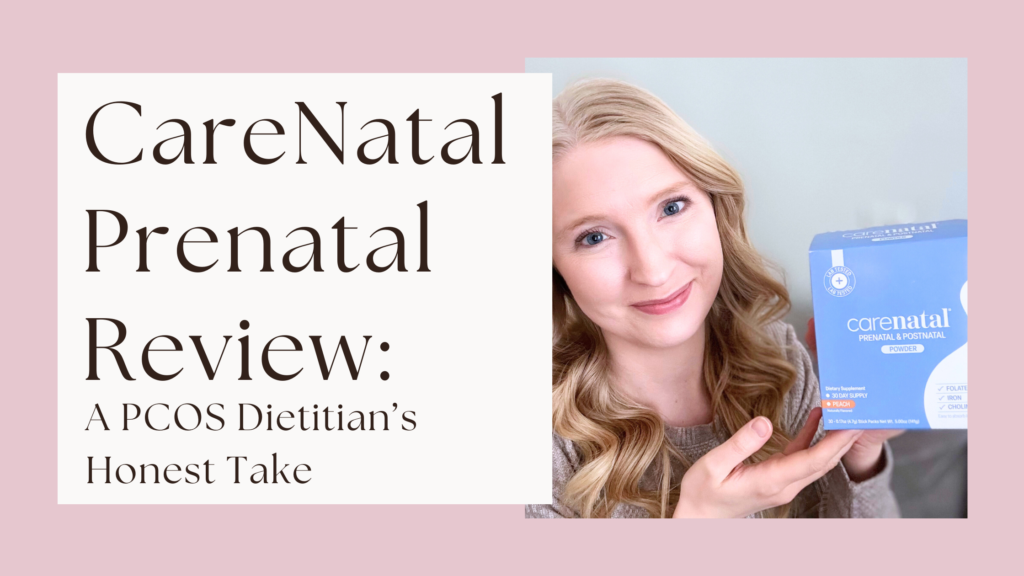
Disclosure: This post is sponsored by CareNatal. However, all opinions are my own and based on my professional assessment as a registered dietitian specializing in PCOS and my personal experience as someone who has navigated fertility and pregnancy.
One of the most common questions I get as a PCOS dietitian is “what supplements should I take?”
And honestly? A prenatal is almost always one of the first supplements I recommend for women with PCOS, whether you’re trying to conceive or not! But with literally thousands of options out there, how do you even know which one is worth your money?!
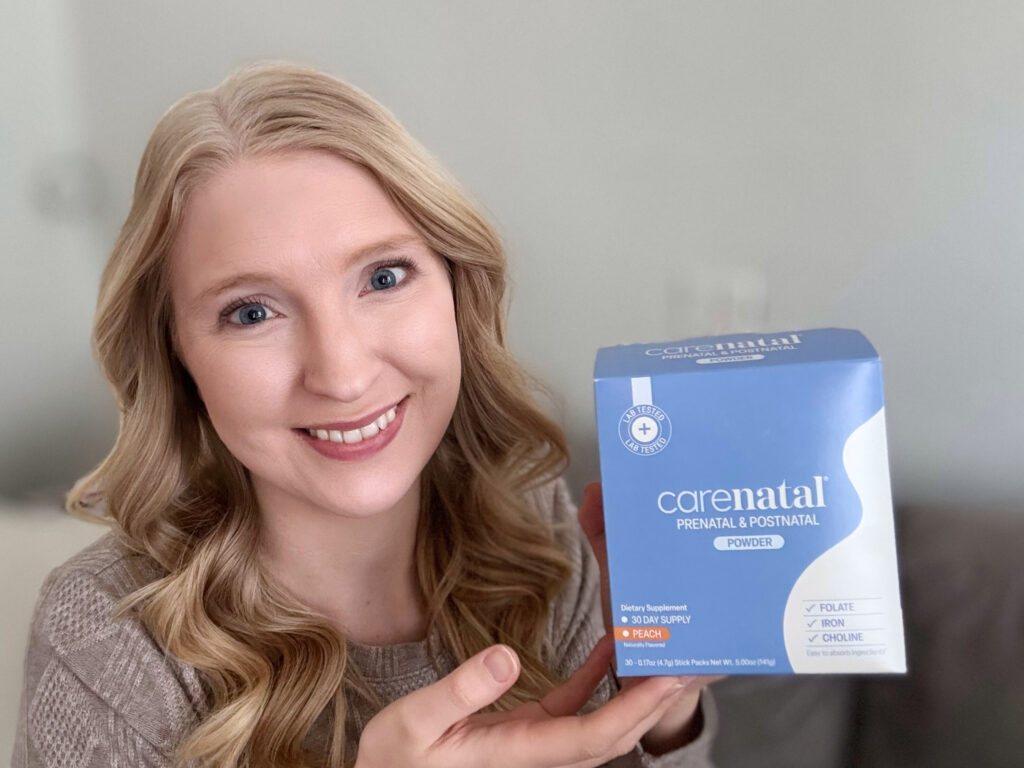
So in this post, I want to break down one I’ve recently tried, CareNatal Prenatal Vitamin Powder. When I first came across CareNatal, I was intrigued by its emphasis on highly bioavailable nutrient forms and higher doses than most prenatals on the market. I’ll give you my honest thoughts on the pros and cons, and help you figure out if CareNatal is right for you.
Why Prenatal Supplements Matter for PCOS (Even If You’re Not Pregnant)
Here’s something that might surprise you: prenatal vitamins aren’t just for pregnancy!
They’re actually super beneficial for women with PCOS at any stage of your journey. Whether you’re trying to conceive or just trying to manage your symptoms, here’s why I’m such a big fan of quality prenatals for PCOS:
- They Fill Common Nutrient Gaps: Research shows that 67-85% of women with PCOS are deficient in vitamin D (4). Women with PCOS are also commonly low in magnesium, B12, and zinc. These deficiencies can also worsen insulin resistance, inflammation, and hormonal imbalances. A solid prenatal (in conjunction with a balanced diet of course) helps you catch up.
- They Support Insulin Sensitivity: Up to 35-80% of us with PCOS deal with some level of insulin resistance (1). The vitamin D, chromium, magnesium, and B vitamins in prenatals play huge roles in how your body processes glucose and responds to insulin. Better insulin sensitivity = better PCOS management overall.
- They Help Reduce Inflammation: We know that PCOS comes with chronic low-grade inflammation that can trigger so many of our annoying symptoms. Nutrients like omega-3s, vitamin D, selenium, and vitamin E are naturally anti-inflammatory and can help calm things down in your body. So finding a prenatal with these is essential for helping lower inflammation.
- They Prep Your Body for Pregnancy (When/If You’re Ready): Even if babies aren’t in your immediate plans, having good nutrient stores is smart if you might want kids someday. Here’s why: nutrients like folate are most critical in the first few weeks of pregnancy—often before you even realize you’re pregnant! That’s why doctors recommend starting prenatals at least 3 months before trying to conceive. Having those levels already optimized can give your baby the absolute best start.
Bottom line? A good prenatal vitamin isn’t just about pregnancy prep. It’s a legit strategy for tackling the root causes of PCOS symptoms and supporting your hormonal health, period.

What Makes A Quality Prenatal Supplement for PCOS
Okay, so not all prenatal vitamins are created equal, especially when you’re dealing with PCOS. Here’s what I always look for when I’m recommending supplements to my clients:
- Dosage: It’s important for the prenatal to not only have the right nutrients, but also have the ideal amount! Many prenatals might look like they have a comprehensive list of vitamins and minerals, and then when you take a closer look they are in lower amounts than recommended. Making sure they have the proper dosage (see below) is key!
- Bioavailability: It’s not just about HOW MUCH of a nutrient a prenatal has. It’s also about WHAT FORM it’s in. You could have a prenatal with 1,000mg of magnesium, but if it’s magnesium oxide (which has the poorest absorption), your body might only absorb 4% of it. Meanwhile, a prenatal with only 100mg of magnesium bisglycinate (highly bioavailable) could actually give you MORE usable magnesium. This is why I’m going to talk about both the dosage you need AND the forms that are actually well-absorbed.
- Methylated Folate (Not Just Folic Acid): Most major medical organizations still recommend folic acid as the only form with research to support preventing neural tube defects. But about 40-60% of people have the MTHFR genetic mutation that makes it hard to convert folic acid into the active form your body needs. This means they need methylated folate, which skips that whole process. Look for a prenatal with BOTH forms (“5-MTHF” or “methylfolate” along with “folic acid”) for at least 600-800mcg total folate. Research also shows higher folate doses (around 5mg) can improve glucose metabolism and cholesterol in PCOS (2).”
- Actually Enough Choline: This is the one most prenatals totally skip or skimp on (and it’s one of the most important!) Choline is critical for baby’s brain development and preventing neural tube defects (5). You need 450-550mg daily, but most prenatals have less than 50mg. Look for at least 250mg.
- Omega-3s (DHA & EPA): These anti-inflammatory fats help with baby’s brain development AND they fight the inflammation driving your PCOS symptoms (7). Omega-3 is one of the most common nutrients I talk about with my PCOS clients, and supplementation is helpful for a lot of them. Ideally you want about 1000mg of EPA + DHA omega 3 with at least 200-300mg of DHA.
- Actually Useful Amounts of Vitamin D: Since most of us with PCOS are deficient in vitamin D (like 67-85% of us!) (4), this one’s non-negotiable for PCOS girlies. Vitamin D affects insulin sensitivity, how well your ovaries work, and hormone balance. Research shows that vitamin D supplementation can improve menstrual regularity, lower testosterone and AMH levels, reduce insulin levels in women with PCOS (8), and infertile women who are supplemented with vitamin D have higher pregnancy rates (9). In PCOS patients specifically, 2,000-4,000 IU of vitamin D supplementation is recommended during pregnancy and breastfeeding (10). So, look for at least 2,000-4,000 IU (50-100mcg) of vitamin D3.
- Iron That Won’t Wreck Your Stomach: Iron is super important during pregnancy and can be helping in fighting that PCOS fatigue. But this is where the form REALLY matters. Cheap forms like ferrous sulfate are notorious for causing constipation and nausea, which is the LAST thing you need when you’re already dealing with pregnancy nausea or taking anti-nausea medications that can make you constipated. Look for ferric bisglycinate or iron bisglycinate chelate. These forms are way gentler on your digestive system, don’t cause constipation like other forms, and your body absorbs them better. The standard dose is 27mg, but if you’re pregnant with twins or multiples (which is more common for PCOS women who need fertility treatments), you may need 45-60mg or more—so that’s something to discuss with your provider.
- Therapeutic Zinc Doses: Zinc can be incredibly beneficial to help with PCOS symptoms. Standard prenatal recommendation is 11-15mg, but if you have PCOS? You actually benefit from 25-50mg for helping with unwanted hair growth, hair loss, acne, and insulin resistance (3). Look for chelated forms like zinc bisglycinate.
- Enough Magnesium: This helps with insulin sensitivity, blood sugar, sleep, and those annoying leg cramps during pregnancy (6). Aim for at least 100mg in forms like magnesium bisglycinate (way easier on your digestion than magnesium oxide).
- Quality B Vitamins: B6, B12, and other B vitamins help with energy, hormone balance, and reducing morning sickness. Metformin, a common medication prescribed to women with PCOS, can also inhibit B12 absorption and lead to a deficency. Make sure they’re in good forms (methylcobalamin for B12, pyridoxal-5-phosphate for B6).
- Form Matters Too: Gummies are easy but nutritionally lacking. Traditional pills are hard to swallow and when you take a bunch of vitamins at once, you might not absorb them all. Powder formats or smaller pills spread throughout the day tend to work better.
Phew! I know, that was a lot! Now let’s see how CareNatal measures up!
CareNatal Pros and Cons: My Honest Opinions
What I Love About CareNatal
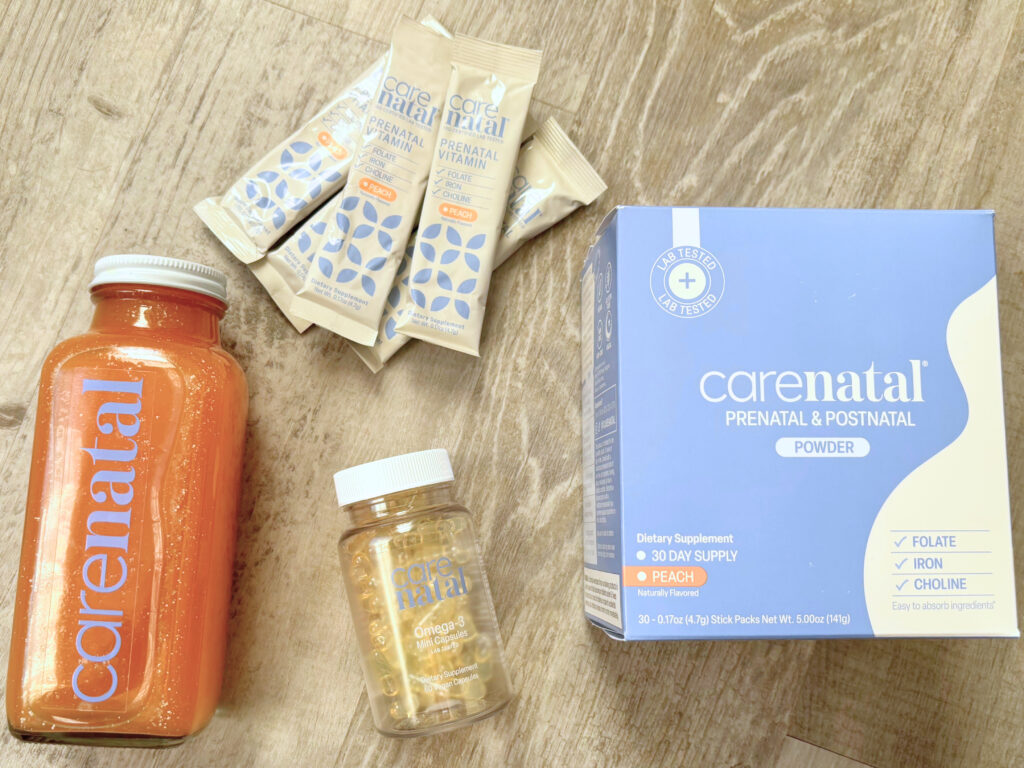
Optimal Nutrient Doses Compared To Other Prenatals: Here’s what I love! CareNatal actually includes nutrients at doses that are way better than your typical prenatal. We’re talking 250mg of choline (that’s 7x more than most one-a-day prenatals!), 680mcg of methylated folate, 1,800 IU of vitamin D (compared to the sad 400 IU in drugstore brands), 292mg of omega-3s (most prenatals have zero!), and 13mg of zinc in a highly absorbable form. This is legitimately impressive compared to what’s typically on the market.

They Use Highly Bioavailable Forms: This is huge! Remember how I said it’s not just about dosage but also about what form the nutrients are in? CareNatal gets this right! We’re talking about a combination of methylated folate (50%) AND folic acid (50%), ferric glycinate for iron (so much easier on your stomach than ferrous sulfate AND better absorbed), zinc bisglycinate (one of the most absorbable forms), magnesium bisglycinate (best absorbed form of magnesium), and retinyl palmitate for vitamin A. Basically all the forms your body can actually USE instead of the bargain-bin versions that just pass right through you. This is what separates a quality prenatal from a cheap one!
All These Nutrients Without Taking 8 Pills a Day: Other quality prenatals out there that contain optimal doses usually require you to take SO many pills. We’re talking 4-8 pills spread out throughout the day. No thank you! With CareNatal, you mix your powder once a day, drink it down, and you’re done. When you’re dealing with PCOS brain fog or pregnancy brain, that simplicity is way more realistic for actually sticking with it.
It’s PCOS-Friendly: They use stevia and monk fruit for sweetness instead of sugar, so it won’t spike your blood sugar or insulin. This is HUGE when you’re managing PCOS! It also contains many of those nutrients essential for PCOS management including omega-3, vitamin D, B12, zinc, and magnesium!
Includes Vitamin K Alongside Vitamin D: Here’s a smart formulation detail! CareNatal includes vitamin K along with vitamin D, which can actually help with vitamin D absorption and utilization in your body. Many prenatals skip vitamin K entirely, but having these two fat-soluble vitamins together is a thoughtful touch that shows they really understand nutrient synergy. With CareNatal you not only get vitamin D but optimum absorption of it!
Gentle Iron That Won’t Make Nausea Worse: If you’ve ever dealt with pregnancy nausea (hello, Zofran constipation!), you know that the LAST thing you need is an iron supplement making things worse. CareNatal’s ferric glycinate iron is a total game-changer here. It’s gentle on your digestive system and doesn’t cause the constipation that cheaper iron forms do. When I was pregnant with my twins and dealing with severe nausea, this would have been a lifesaver!
Lab Tested for Real: They actually publish their third-party testing results, which gives me major confidence as a dietitian. Since supplements aren’t regulated by the FDA, it can be hard to know exactly what you’re getting in that supplement. With CareNatal you know exactly what you’re getting, and that transparency is pretty rare.
You Can Ease Into It: Dealing with morning sickness? Start with half a packet for a week or two, and you’ll still get 680mcg of folate (which meets the minimum rec). Then work your way up when you’re ready. You can also mix it with juice, smoothies, or other flavored drinks if that helps.

The Not-So-Perfect Parts (Being Real With You)
Still Lower Than Optimal PCOS Doses: Okay, so here’s the nuanced truth. While CareNatal has WAY more of these nutrients than your average prenatal (which is awesome!), some of the doses are still lower than what research shows can be really therapeutic for PCOS specifically. Granted, it was formulated to meet pregnancy standards, not therapeutic doses for PCOS. But I’m a PCOS dietitian, so let’s break this down:
- Zinc: CareNatal has 13mg, which is better than most prenatals (many have 8-11mg). But studies show 25-50mg can really help with PCOS symptoms like unwanted hair growth, hair loss, acne, and insulin resistance (3). The good news? The form they use (zinc bisglycinate) is super well-absorbed, and 13mg still provides benefits! Plus, if you’re eating zinc-rich foods like I recommend in my free PCOS menu plan (pumpkin seeds, chickpeas, red meat), you can bridge that gap. Or you could add a separate zinc supplement if you need those higher therapeutic doses. Just chat with your doctor first.
- Vitamin D: At 1,800 IU, this is significantly better than the 400 IU you see in drugstore prenatals. But since 67-85% of us with PCOS are vitamin D deficient (4), you might benefit from 2,000-4,000 IU total, especially if you’ve gotten your levels tested and your vitamin D was low.
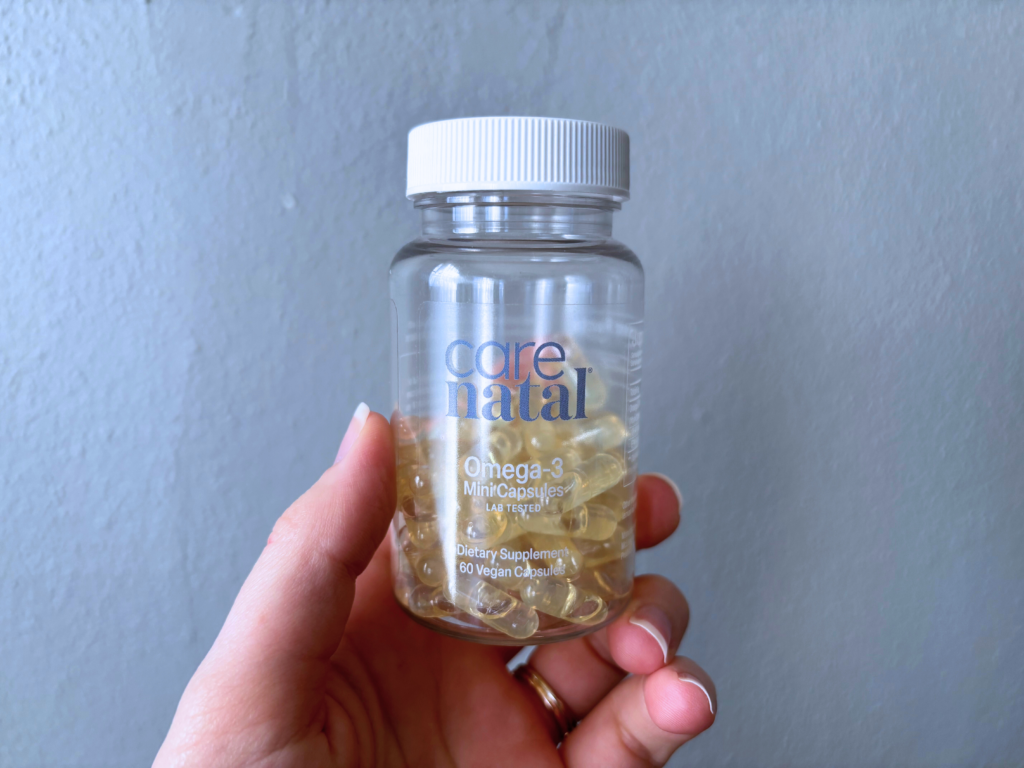
- Omega-3s/DHA: CareNatal includes omega-3 mini softgels with 160mg of DHA, which is honestly more than most prenatals (many have ZERO). However, the American Pregnancy Association recommends at least 300mg of DHA daily during pregnancy and breastfeeding for baby’s brain and eye development. And for women with PCOS looking to manage inflammation, we’re talking about 1,000mg+ of total EPA + DHA omega-3 daily. So if you’re not eating seafood 2-3 times per week, you’ll likely want to add a separate, higher-dose omega-3 supplement.
The way I see it? CareNatal gives you a really solid foundation that’s way better than most prenatals! Remember, supplements are meant to complement those diet and lifestyle changes, not replace them! (check out my free 7-day PCOS diet plan to help with this!)
No Calcium: CareNatal leaves out calcium on purpose because it blocks iron absorption. Smart move since iron deficiency is so common in pregnancy! But it does mean you need to get calcium from food (such as yogurt, dairy, fortified plant milks, leafy greens, tofu.) For most people eating a varied diet, this is totally doable.
It’s Not the Cheapest Option: At $49-59/month depending on your subscription, it’s definitely pricier than that $20 prenatal from Target. BUT! If you price out buying a basic prenatal plus separate choline, omega-3s, and better iron? You’re easily hitting $65+. So it’s actually pretty amazing value for what you’re getting!
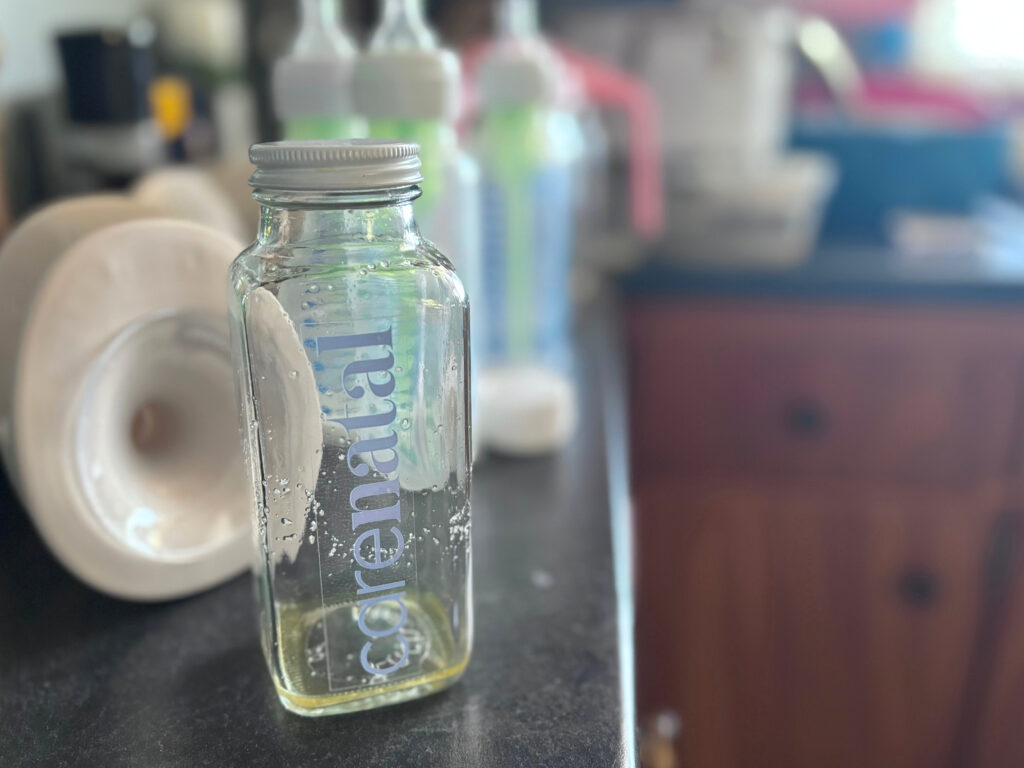
One More Dish to Wash: Okay this might sound silly, but washing that shaker bottle every single day adds to your dishes. As a twin mom without a dishwasher (the joys of our charming 1900s house!), on those days when I’m already drowning in baby bottles and pump parts this is mildly annoying. With pills, you just swallow and you’re done. With powder, there’s cleanup. Is it a huge deal? No. I’d definitely take it over having to choke down 8 pills a day. But it’s real, so I’m putting it out there.
Final Verdict
CareNatal is the closest you’re going to get to a truly comprehensive prenatal for PCOS without having to take 4-8 pills a day. It covers the top non-negotiables for PCOS and pregnancy: choline, iron (in a gentle form!), methylated folate, and vitamin D. All in doses and forms that are actually way better than most prenatals on the market.
I wish I had this prenatal when I was trying to conceive! I literally could not swallow pills (like, I would gag every. single. time.) So I ended up taking gummy prenatals just to be taking something. Then during pregnancy? Forget it. The nausea was so bad I couldn’t keep those giant pills down. A powder like this would have been an absolute lifesaver!

CareNatal Prenatal Vitamin Powder is perfect for you if:
- You want a comprehensive, one-and-done prenatal with all the good stuff
- You struggle with swallowing pills (been there!)
- You’re dealing with morning sickness and can’t keep pills down
- You have PCOS and want insulin-friendly sweeteners
- You care about getting therapeutic doses of key nutrients like choline and methylated folate
- You want a brand that’s transparent with third-party testing
Is CareNatal perfect for literally everyone? Nope. But for women with PCOS who are navigating fertility, pregnancy, or just trying to manage symptoms? It’s one of the best options I’ve found. The formulation is thoughtful, the nutrients are in forms your body can actually use, and as someone who geeks out over both clinical research AND real-world practicality, CareNatal honestly checks all my boxes.Want to see how CareNatal compares to your current prenatal? Check out their comparison chart. It’s pretty eye-opening!
Disclaimer: This article is for informational and educational purposes only and is not intended as medical advice. Always consult with your healthcare provider before starting any new supplement regimen, especially if you are pregnant, breastfeeding, trying to conceive, or have any medical conditions. Individual nutrient needs vary, and what works for one person may not be appropriate for another.
References
- Saad MJA, et al. (2022). Markers of insulin resistance in Polycystic ovary syndrome women: An update. World Journal of Diabetes, 13(3):129-149. https://pmc.ncbi.nlm.nih.gov/articles/PMC8984569/
- Asemi Z, et al. (2014). Metabolic response to folate supplementation in overweight women with polycystic ovary syndrome: A randomized double-blind placebo-controlled clinical trial. Molecular Nutrition & Food Research, 58(11):2465-2471. https://pubmed.ncbi.nlm.nih.gov/24828019/
- Jamilian M, et al. (2016). Effects of Zinc Supplementation on Endocrine Outcomes in Women with Polycystic Ovary Syndrome: a Randomized, Double-Blind, Placebo-Controlled Trial. Biological Trace Element Research, 170(2):271-278. https://pubmed.ncbi.nlm.nih.gov/26315303/
- Thomson RL, et al. (2012). Vitamin D in the aetiology and management of polycystic ovary syndrome. Clinical Endocrinology, 77(3):343-350. https://pubmed.ncbi.nlm.nih.gov/22574874/
- Korsmo HW, et al. (2023). Association between Maternal Choline, Fetal Brain Development, and Child Neurocognition: Systematic Review and Meta-Analysis of Human Studies. Advances in Nutrition, 14(1):57-85. https://pubmed.ncbi.nlm.nih.gov/36041182/
- Shahmoradi S, et al. (2024). The Effect of Magnesium Supplementation on Insulin Resistance and Metabolic Profiles in Women with Polycystic Ovary Syndrome: a Randomized Clinical Trial. Biological Trace Element Research, 202(3):941-946. https://pubmed.ncbi.nlm.nih.gov/37393389/
- Fazelian S, et al. (2024). Role of Omega-3 Fatty Acids in Improving Metabolic Dysfunctions in Polycystic Ovary Syndrome. Nutrients, 16(17):2961. https://pmc.ncbi.nlm.nih.gov/articles/PMC11397015/
- Leiman-Larysz K. (2023). Influence of Vitamin D on the Incidence of Metabolic Syndrome and Hormonal Balance in Patients with Polycystic Ovarian Syndrome. Nutrients, 15(13):2952. doi: 10.3390/nu15132952
- Simpson S. (2023). Vitamin D and infertility. Current Opinion in Obstetrics & Gynecology, 35(4):300-305.
- Szabolcs Várbiró, et al. (2022). Effects of Vitamin D on Fertility, Pregnancy, and Polycystic Ovary Syndrome—A Review. Nutrients, 14(8):1649. doi: 10.3390/nu14081649
Hi! I’m Hannah, your PCOS dietitian! I empower women with PCOS to eat balanced without restrictive diets so they can lose weight and feel their best. Whether through practical tips or grace-filled encouragement, I’m here to guide you every step of the way!

